Business Continuity Measures

Business Continuity Measures

We will create a logistics system that ensures our customers' supply chains are not interrupted, even in unforeseen circumstances.

The risks of transportation routes suddenly becoming unusable are diversifying, including natural disasters, accidents, and changes in international affairs.
NX ensures uninterrupted logistics by diversifying transportation routes through a modal combination of trucks, rail, and sea.
Solution Overview

To minimize the risk of transportation disruptions due to various factors such as natural disasters, accidents, and changes in international affairs, we have established diversified transportation routes and alternative transportation schemes in advance. By combining the strengths of truck, rail, and sea transport, we have created a system that allows us to continue transportation by switching to an alternative mode or route even if a problem occurs in a specific mode or route, ensuring that our customers' supply chains are not interrupted.

  • Diversifying risk through the diversification of transportation routes.

    Diversifying risk through the diversification of transportation routes.

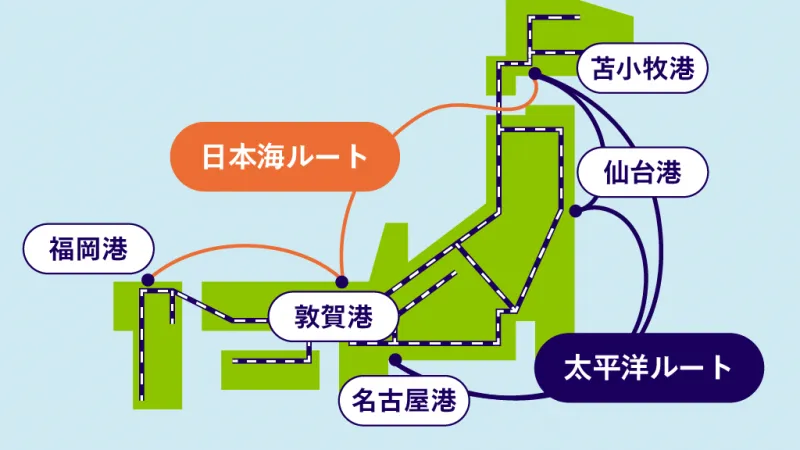
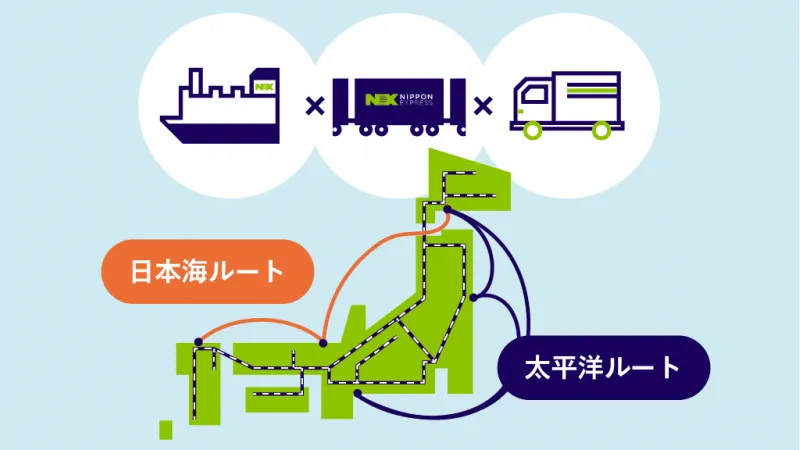
    By combining multiple transport modes and routes, such as the Pacific route and the Sea of Japan route, and using rail, sea, and truck transport, the system is designed to allow for continued transport even if one route is disrupted.

  • Addressing the driver shortage problem

    Addressing the driver shortage problem

    Modal shift, which replaces long-distance truck transport with rail and sea transport, contributes to both business continuity planning (BCP) measures and addressing the driver shortage problem.

Example of a Business Continuity Plan (BCP) Measures Scheme

For the Tokaido Line, a major artery for logistics, and the Sanyo Line, which is prone to large-scale disasters, we have established alternative transportation schemes in advance. Furthermore, if the Keihin Port becomes unusable, we will utilize sea transport routes via other ports such as Nagoya Port and Hakata Port. Because NX has a diverse network of transportation routes throughout Japan, we can flexibly propose alternative routes depending on the situation, even in the event of an emergency.

  • Alternative scheme for the Kanto-Kansai section (Tokaido Line)

    Alternative scheme for the Kanto-Kansai section (Tokaido Line)

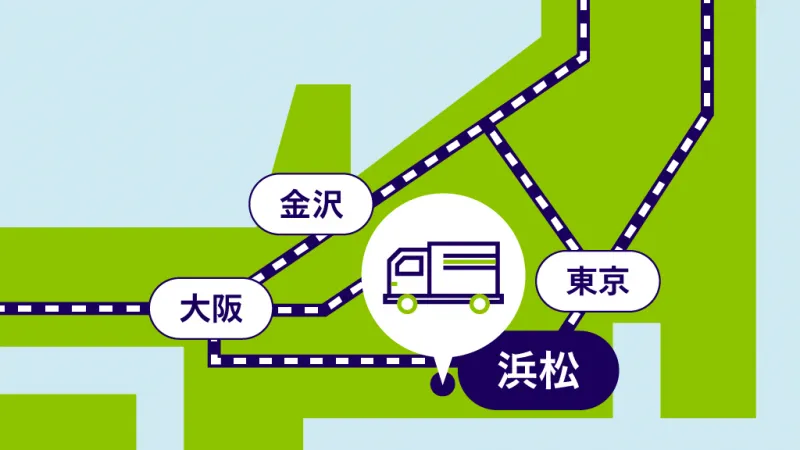
    In preparation for potential disruptions to the Tokaido Line railway service, we have established a truck-based alternative transportation scheme using Hamamatsu as a transit hub. This ensures that we can quickly implement alternative transportation for rail freight.

  • Alternative scheme for the Kansai-Kyushu section (Sanyo Line)

    Alternative scheme for the Kansai-Kyushu section (Sanyo Line)

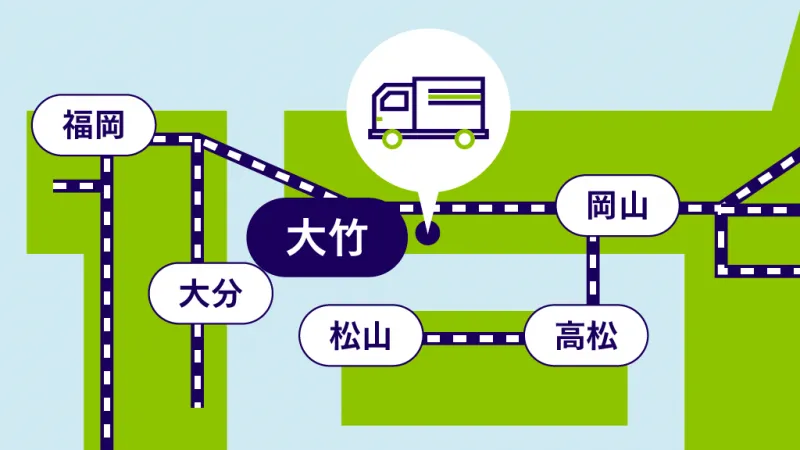
    In preparation for potential disruptions to the Sanyo Line railway service, a truck-based alternative transportation scheme has been established with Otake as a transit hub. This will maintain the north-south transportation line during disasters.

  • Alternative port scheme when Keihin Port is unavailable

    Alternative port scheme when Keihin Port is unavailable

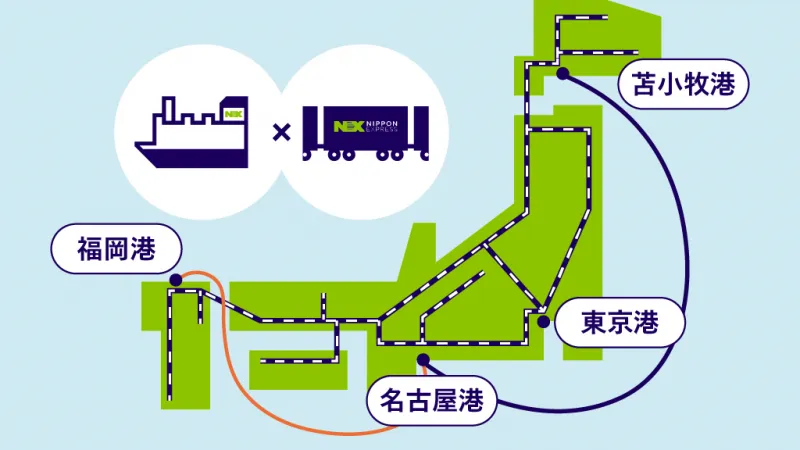
    The Keihin Port is often congested due to increased cargo volume, making it difficult for ships to enter and handle cargo at Tokyo Port. To prepare for emergencies such as accidents and natural disasters, a relay transport scheme has been established that combines domestic shipping via other ports such as Nagoya Port and Hakata Port with rail transport.

  • Using the Sea of Japan route when the Pacific route is unavailable.

    Using the Sea of Japan route when the Pacific route is unavailable.

    If the Pacific route becomes unusable, alternative transportation will continue via the Sea of Japan route (Sea & Rail) connecting Hakata Port, Tsuruga Port, and Tomakomai Port. This diversification of transportation routes will maintain the supply chain.