Sea and Rail

Sea&Rail

A domestic integrated transportation service combining maritime and rail freight transportation.

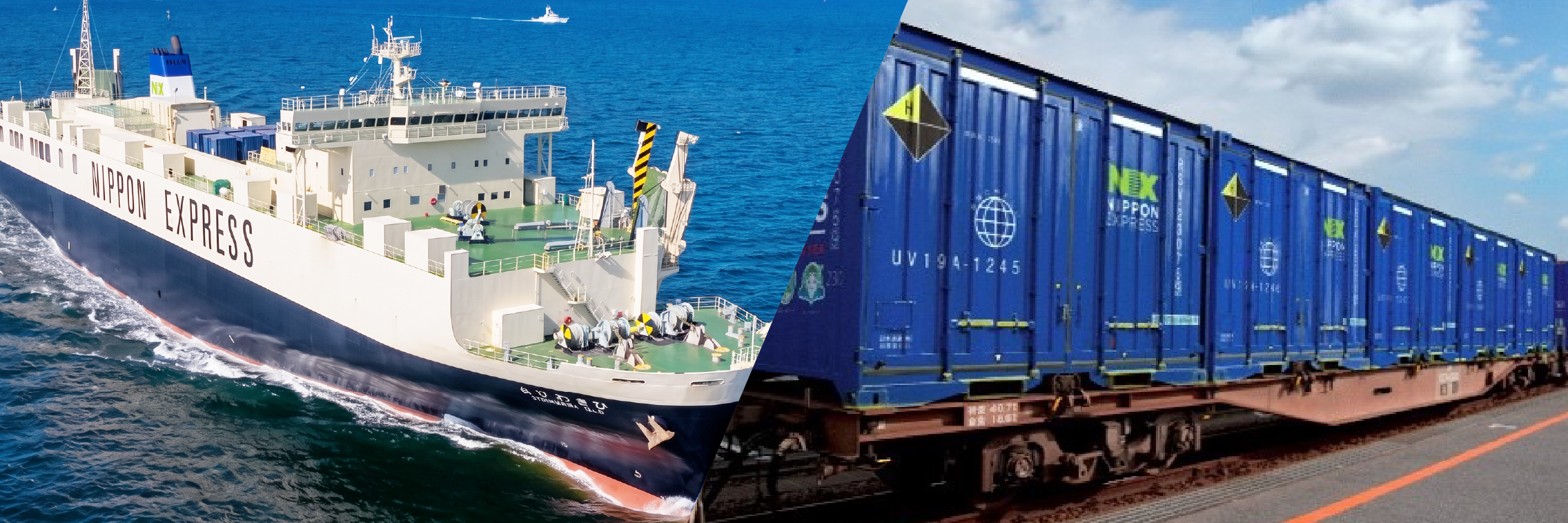
Using NX-developed **RSV containers**, we offer 11 services on nine routes spanning Japan from Hokkaido to Kyushu, without transloading cargo between sea and rail.
We comprehensively address logistics challenges, including driver shortages, decarbonization, and business continuity planning (BCP).
Solution Overview

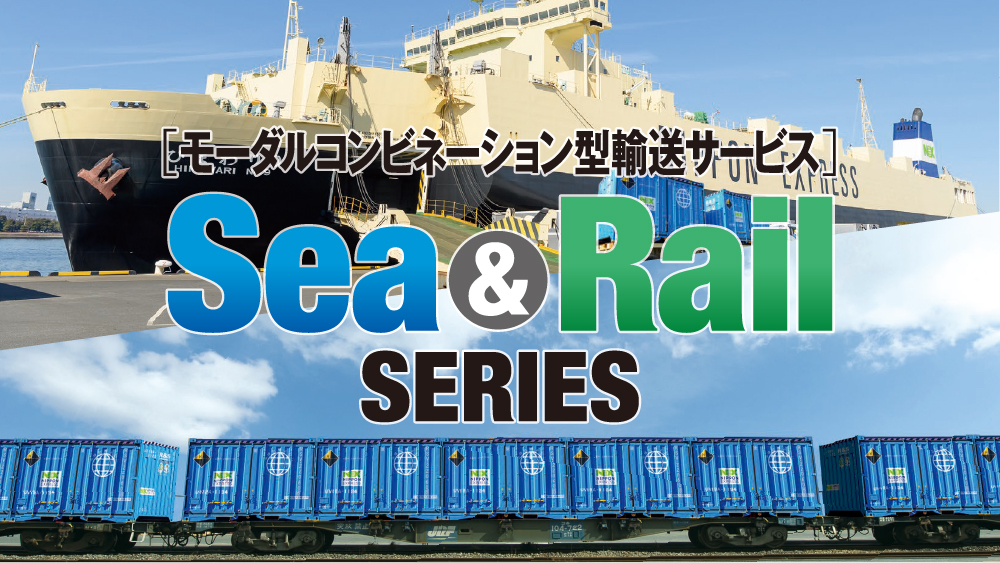
Sea&Rail is a "modal combination" type transportation solution that combines the strengths of both sea and rail transport. By flexibly combining both modes according to customer needs, we optimize transportation costs, environmental impact, and lead times. With domestic vessels such as X's unique "Himawari" and NX's proprietary RSV containers, we achieve integrated transportation without transshipment.

Solution Overview
Service OverviewDomestic multimodal transport combining sea and rail transport
Equipment usedNX's own vessel "Himawari" and other partner vessels / RSV containers (compatible with both rail and sea standards)
Target cargoGeneral cargo, automotive parts, machine parts, dangerous goods, domestic transshipment of international containers, etc.

Available Routes

RouteOriginDestinationVessel Operator
Hokkaido RouteHokkaido (Tomakomai Port / Kushiro Port)Tokyo PortNippon Express (own ship "Himawari")
Kyushu RouteTokyo PortKyushu (Hakata Port)Nippon Express (own ship "Himawari")
Pacific RouteNagoya Port (Japanese only)Sendai Port / Tomakomai PortTaiheiyo Ferry Co., Ltd.
Sea of Japan Route 1Tsuruga PortHakata Port (Japanese only)Kinkai Yusen Co., Ltd.
Sea of Japan Route 2Tsuruga PortTomakomai PortKinkai Yusen Co., Ltd.
East Kyushu Route 1Oita PortKobe Port (Japanese only)MOL Sunflower Ltd.
East Kyushu Route 2Beppu PortOsaka Nanko PortMOL Sunflower Ltd.
Kitakyushu RouteShinmoji PortOsaka Nanko PortMeimon Taiyo Ferry Co., Ltd.
Southern Kyushu RouteMiyazaki PortKobe Port (Japanese only)Miyazaki Car Ferry Co., Ltd.

Implementation effects

  • Significantly reduce CO2 emissions

    CO2 emissions per ton-kilometer are approximately 1/10 for rail and 1/7 for sea transport compared to trucks. Combining both modes of transport significantly contributes to the decarbonization of long-distance transportation. The "EcoTrans Navi" app also allows for the creation of reports on reduction effects.

  • Addressing the driver shortage problem

    Replacing long-distance truck transport with sea and rail transport will solve the driver shortage problem.

  • Business Continuity Plan (BCP) measures and double-tracking of transportation routes

    By combining multiple modes of transport and routes, such as the Pacific route, the Sea of Japan route, and rail transport, we diversify the risk of transport disruptions due to natural disasters and accidents.

  • No transshipment required, improving operational efficiency.

    NX's proprietary RSV containers are compatible with both rail and sea standards. Because they can be transported across land and sea in their original container form, transshipment work and time at ports and stations can be significantly reduced.

Route Introduction

  • Sea&Rail Dangerous Goods Transport

    Sea&Rail Dangerous Goods Transport

    This is a combined sea and land transport service for dangerous goods. By bypassing the Seikan Tunnel, where the passage of dangerous goods is restricted, we enable the transport of high-pressure gases, flammable liquids, toxic substances, and other dangerous materials between Hokkaido and Honshu.

  • Sea&Rail Domestic Transit Transportation

    Sea&Rail Domestic Transit Transportation

    This is a domestic transit transportation service connecting major ports such as Tokyo, Hakodate, and Fukuoka, where international container ships call, with our customers' bases. With 5-6 regular daily sailings utilizing RORO vessels, and the convenience of one-stop arrangements from sea to rail and truck, we ensure stable lead times.

  • Sea&Rail Japan Sea Route

    Sea&Rail Japan Sea Route

    This route connects Hakata Port, Tsuruga Port, and Tomakomai Port. The addition of this double-track route to the Pacific route allows it to function as an alternative mode of transport during disasters. Delivery is possible within 3-4 days, counting the collection day as day 1.