
By routing shipments by sea to bypass the Seikan Tunnel, where the passage of dangerous goods is restricted, we enable the transportation of high-pressure gases, flammable liquids, toxic substances, and other dangerous goods between Hokkaido and Honshu.
Sea&Rail Dangerous Goods Transportation — Connecting Hokkaido and Honshu
Sea&Rail Dangerous Goods Transportation — Connecting Hokkaido and Honshu
Solution Overview
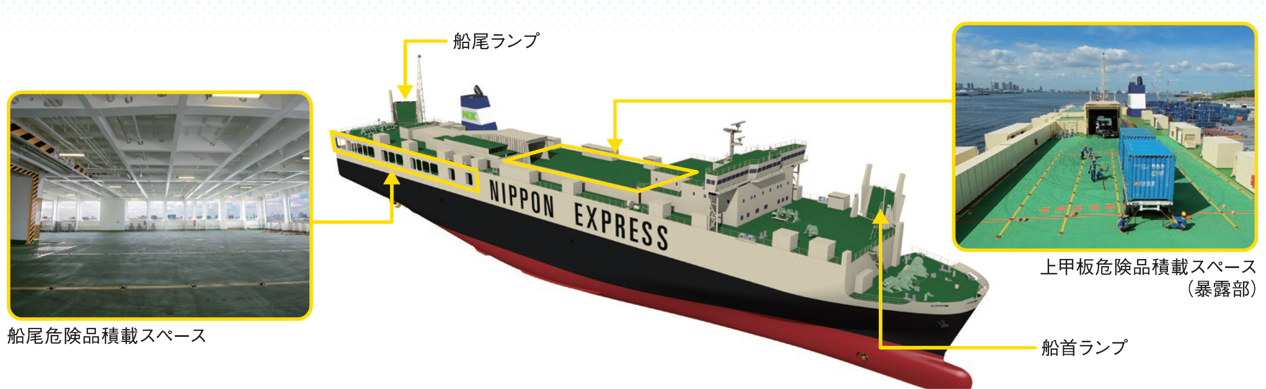
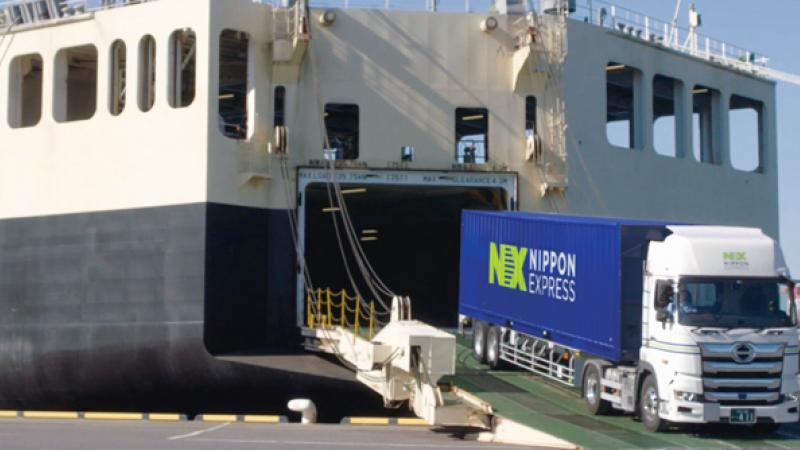
The transport of dangerous goods via rail through the Seikan Tunnel is restricted. This service utilizes the dedicated dangerous goods area on NX's own vessel "Himawari" to bypass the Seikan Tunnel by sea, and then connects to the rail network, enabling integrated sea and land transport of dangerous goods between Hokkaido and Honshu, which was previously restricted. Since RSV (rail and sea standard compatible) containers are used, transshipment between sea and rail is unnecessary. NX also handles all necessary paperwork for dangerous goods transport. *The diagram is available in Japanese only.
| Service Overview | Integrated land and sea transport of dangerous goods (rail + sea) |
|---|---|
| Supported Routes | Hokkaido (Tomakomai/Kushiro) ↔ Tokyo (using our own vessel "Himawari") |
| Target cargo | Dangerous goods such as high-pressure gases, flammable liquids, and poisons. |
| Equipment used | RSV containers (compatible with both rail and sea standards) / Our own vessel "Himawari" (dedicated area for hazardous materials) |
| Supplemental support | NX handles all necessary paperwork for transporting dangerous goods. |
Implementation effects
-
Elimination of transportation constraints
By bypassing the restrictions on dangerous goods passing through the Seikan Tunnel with sea transport, we will be able to realize rail transport of dangerous goods between Hokkaido and Honshu, which was previously difficult. This will enable long-distance integrated sea and land transport without relying on land transport.
-
Reducing environmental impact
CO2 emissions per ton-kilometer are approximately 1/10 for rail transport and 1/7 for sea transport compared to truck transport. Switching from long-distance truck transport will significantly reduce the environmental impact of transporting dangerous goods.
-
Driver shortage and BCP measures
This addresses the shortage of long-haul drivers and simultaneously secures alternative routes during disasters, stabilizing the supply chain.
Transportable dangerous goods
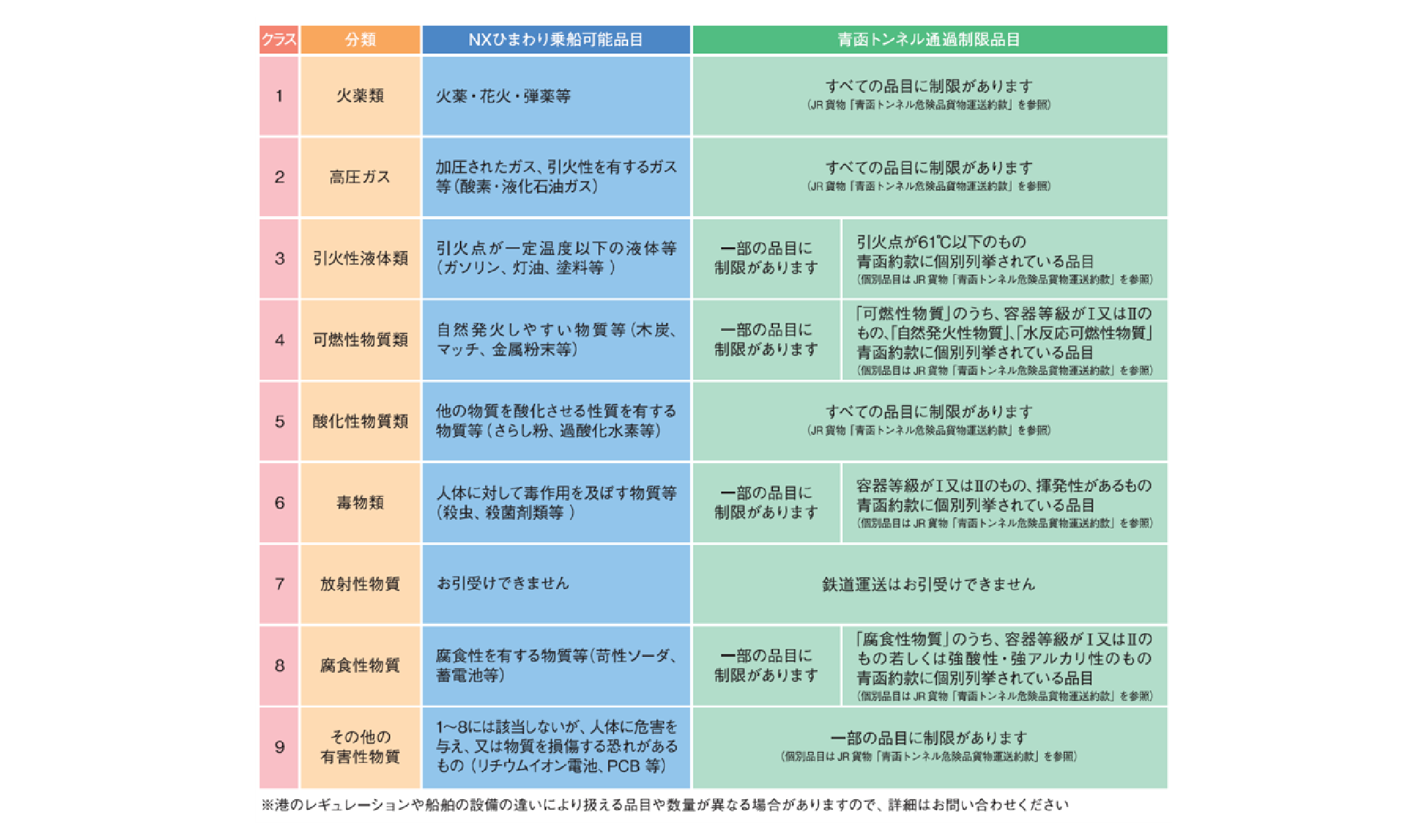
You can view a list of hazardous materials that can be transported by the NX Himawari freighter and items that are restricted from passing through the Seikan Tunnel. *The table is available in Japanese only.
Related Services
-
Sea & Rail (Combined Sea and Rail Transportation)
A modal combination of sea and rail. See here for an overview of Sea&Rail and all routes. -
Sea&Rail Domestic Transit Transportation
A domestic transit transportation service connecting major ports where international container ships call with our customers' locations. -
Sea&Rail Japan Sea Route
The Japan Sea route connects Hakata Port, Tsuruga Port, and Tomakomai Port. This route, along with the Pacific Ocean route, has been double-tracked.