
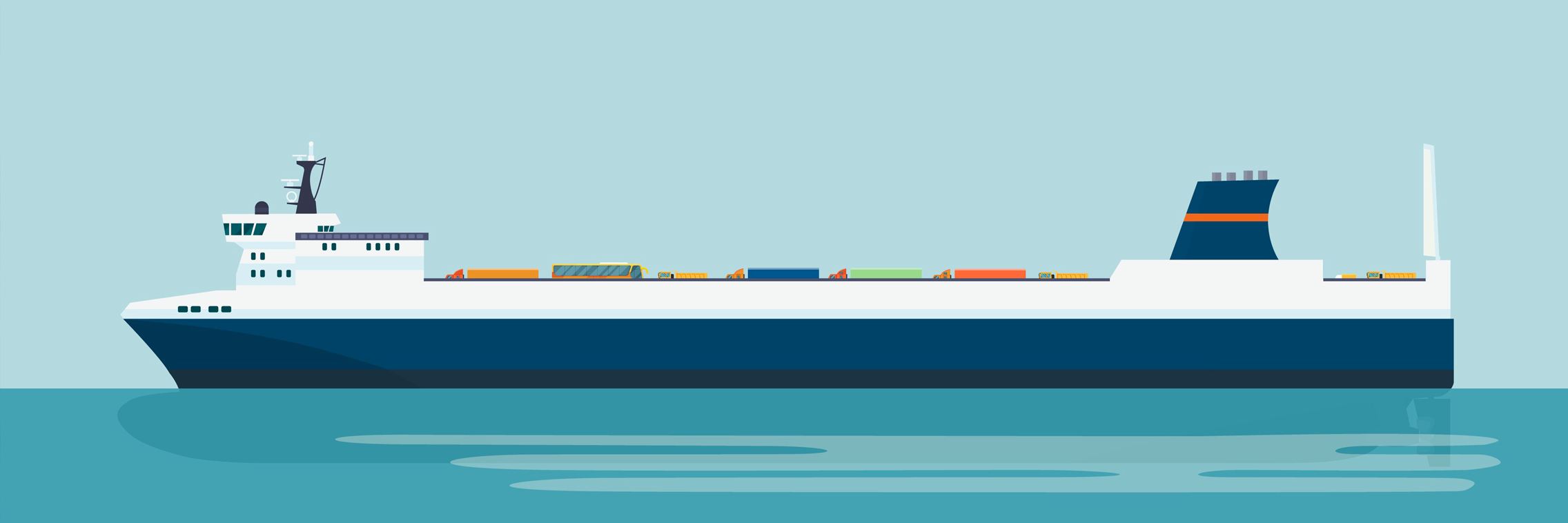
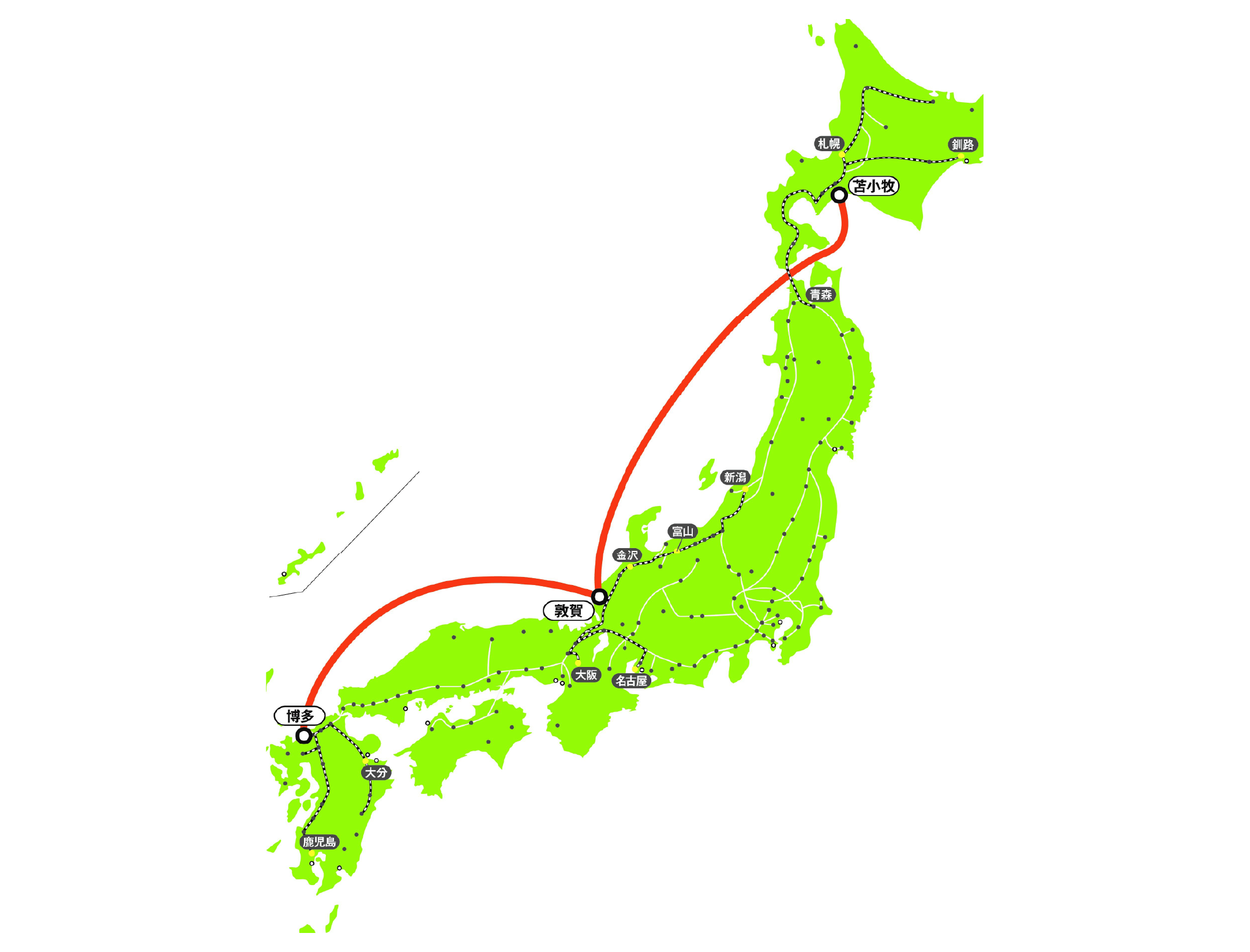
We offer a maritime route on the Sea of Japan connecting Hakata Port, Tsuruga Port, and Tomakomai Port. By creating route redundancy alongside the existing Pacific route, this service also provides an alternative transportation option in the event of a disaster. Delivery is available on the third or fourth day, with the pickup date counted as Day 1.
Sea&Rail Sea of Japan Route — Hakata-Tomakomai Route
Sea&Rail Sea of Japan Route — Hakata-Tomakomai Route
Solution Overview
The service operates every other day between Hakata Port and Tsuruga Port, and daily from Monday to Saturday between Tsuruga Port and Tomakomai Port, ensuring regular and stable transportation. Because it uses NX's proprietary RSV containers, transshipment between sea and rail is unnecessary. Combined with the Pacific route, it also functions as an alternative transportation route in the event of a disaster. *The route map is available in Japanese only.
| Service Overview | Domestic multimodal transport combining sea transport along the Sea of Japan coast with rail transport. |
|---|---|
| Supported Routes | Hakata Port ↔ Tsuruga Port ↔ Tomakomai Port |
| Frequency of operation | Hakata to Tsuruga: Operates every other day / Tsuruga to Tomakomai: Operates daily from Monday to Saturday |
| Lead time | Delivery takes 3-4 days, counting the pickup day as day 1 (this may vary depending on the pickup/delivery area). |
| Equipment used | RSV container (compatible with both rail and maritime standards) |
| Vessel Operator | Kinkai Yusen Co., Ltd. |
Implementation effects
Related Services
-
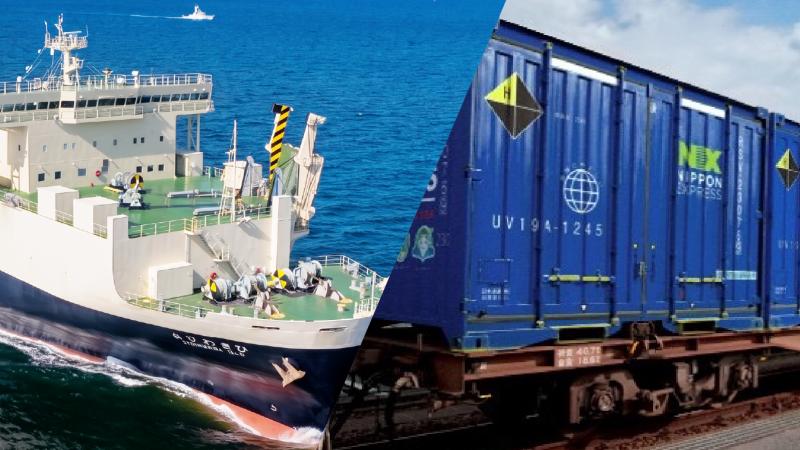
Sea & Rail (Combined Sea and Rail Transportation)
A modal combination of sea and rail. See here for an overview of Sea&Rail and all routes. -

Sea&Rail Dangerous Goods Transport
This service bypasses the restrictions on dangerous goods in the Seikan Tunnel by using sea transport, enabling integrated sea and land transport of dangerous goods between Hokkaido and Honshu. -
Sea&Rail Domestic Transit Transportation
A domestic transit transportation service connecting major ports where international container ships call with our customers' locations.